How we test record cleaning brushes
This page describes what we actually did, in the order we did it. It is desk work and bench use, not laboratory work, and we would rather say that plainly than dress it up.
What we did not do
There is no clean room here. Nobody weighed dust before and after a sweep, nobody put the velvet under a microscope, and nobody ran a particle counter over a platter. We have no instrument that can measure how much dust a brush lifts, so no such number appears anywhere on this site. The same goes for fiber density, lifespan in months and any figure with a percent sign attached to cleaning performance. If you find a competitor quoting one, ask them where it came from.
We also do not run comparison rounds against named competitor products. We sell one item, we have no shelf of rivals in the back room, and inventing head-to-head scores would be the fastest way to lose the point of this page.
Step one: read every rating in the file
The buyer feedback record held 151 ratings when we pulled it on July 29, 2026. The average is 4.6 out of 5. We recorded the full distribution rather than the average alone, because the shape of a rating file says more than its mean: 126 five-star, 11 four-star, 5 three-star, 2 two-star and 7 one-star. Those numbers are printed as bars on the reviews page, low ratings included.
Fifty of those ratings came with written text. Three of them were unusable, two being keyboard mashing and one an alphabet, which left 47 readable reviews. That number, 47, is the base for every share we publish.
Step two: tag and count the themes
We read the 47 reviews one at a time and wrote down every subject each buyer raised without being prompted. A review can raise two subjects, so we tagged both. Then we counted. Seven themes appeared more than twice, and two of them are complaints. Dusting performance leads at 9 mentions, then description accuracy at 6, fast delivery and build quality at 5 each, value and the pad-versus-bristles surprise at 4 each, and slow delivery at 3.
The point of counting rather than summarizing is that a count survives our opinion. We cannot make the three slow-delivery complaints disappear by writing a cheerful paragraph around them, and we do not try. The full table is published on the reviews page exactly as we tallied it.
Step three: check the pieces against the spec sheet
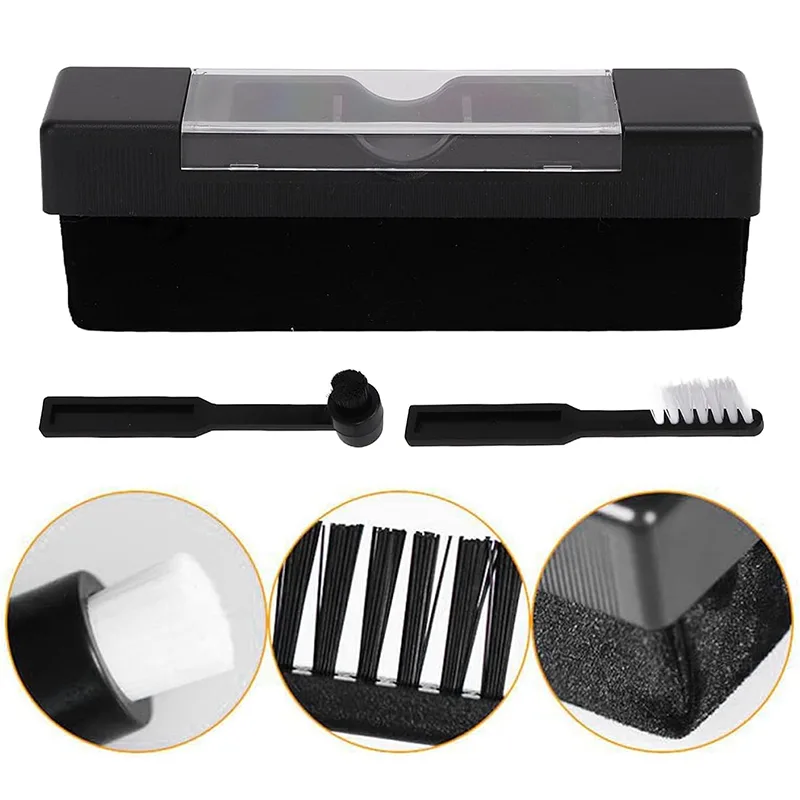
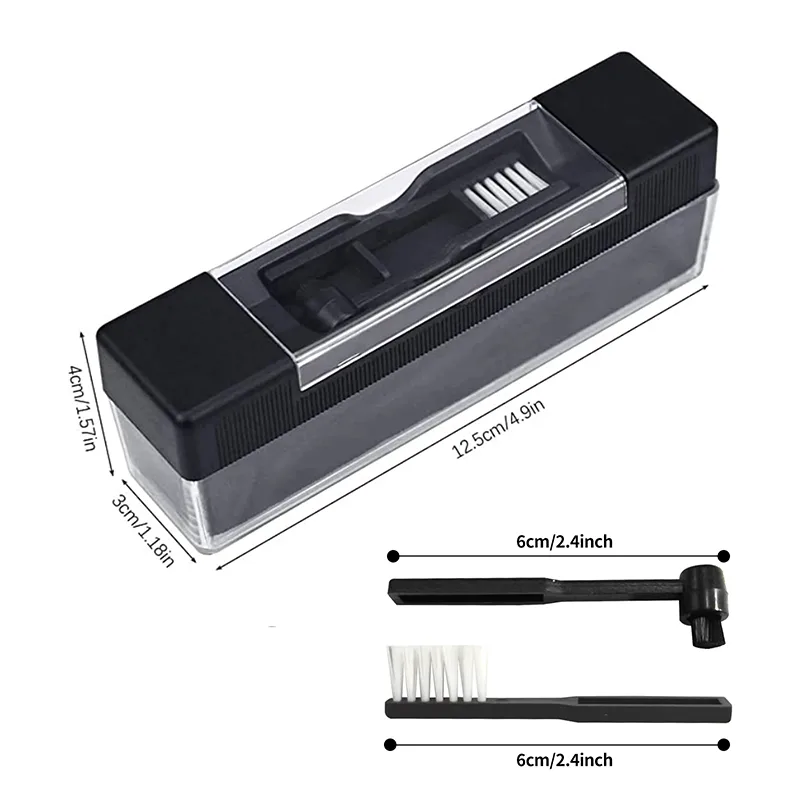
Three components and a set of dimensions are documented. We checked each one against the product in hand and against the photographed dimension chart, and we write only what both agree on.
| Piece | Length | Working surface |
|---|---|---|
| Velvet block with sliding cover | 4.9 in (12.5 cm) | Black velvet face on both long sides |
| Stylus brush | 2.4 in (6 cm) | Round head, black bristles |
| Detail brush | 2.4 in (6 cm) | Straight head, white nylon bristles |
Body material is black ABS. Packed weight is 3 oz (85 g). The set is listed for 33, 45 and 78 RPM records plus CDs.
One correction came out of this step and it matters. Several listings for this style of product call the block a brush with bristles. It is not. It is a firm block with a velvet face, which is why four buyers in the file said so themselves. We describe it as a velvet pad everywhere on this site, and we explain the difference against the other common material in carbon fiber versus velvet.
Step four: use it like a person, not like a lab
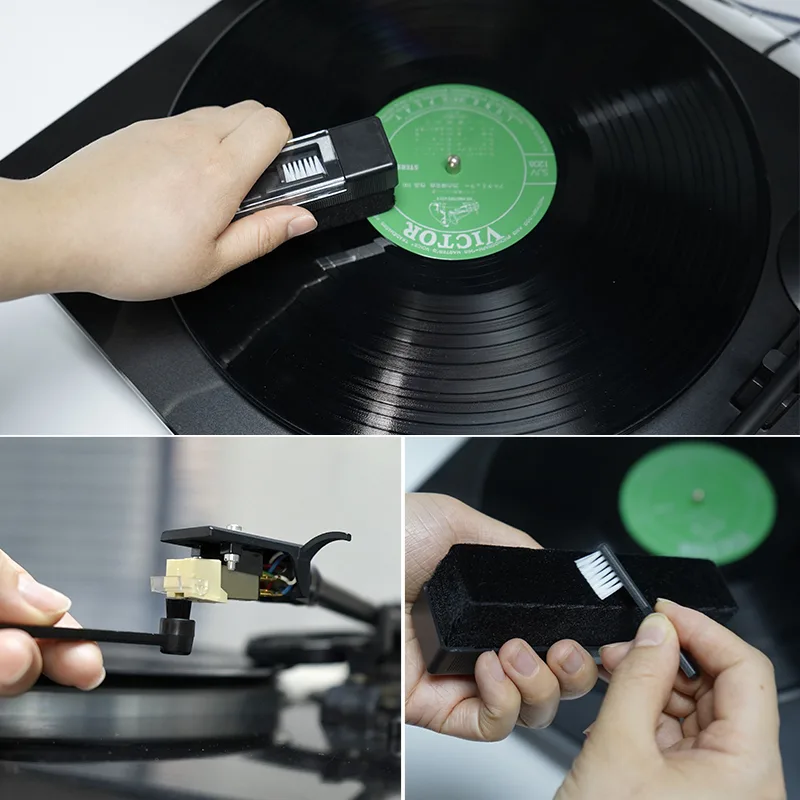
The bench is a Technics SL-1200 and a stack of records that get played rather than admired. The set gets used the way anybody would use it: a sweep before the needle drops, the detail brush across the velvet when the pile turns gray, the stylus brush back to front once a week. What that tells us is not a measurement, it is a set of habits worth passing on, and they are written out in how to clean vinyl records and the record care routine.
Use also surfaces the things a spec sheet never mentions. The clear cover slides off and doubles as a handle, which is the difference between a comfortable sweep and pressing your thumb into velvet. The block loads up faster than expected in a dusty room, which is precisely why the white nylon brush is in the box. Neither fact is measurable, both are useful.
What happens when we are wrong
Everything above is a method, not a guarantee. If a page here contradicts what arrives in your box, we want to hear about it through the contact page, and we correct the page. Meanwhile the commercial side is simple: shipping is free, orders leave in 1 to 2 business days and land in 8 to 10, and every order is covered by a 30-day money-back guarantee. The details sit in our shipping policy and refund policy.
The person doing all of the above is introduced on the about page. The product itself is on the homepage, with the components broken out on the record cleaning kit page, the anti-static record brush page and the stylus brush page.